Eco Friendly Paints
Paints and Coatings market in India is steadily growing matching the construction industry and also facing challenges as all the evolving industries do. One of the major challenges to be addressed is the proposed compliance of environmental regulations and alternatives. Paint manufacturers all over the world are sincerely trying to satisfy the end users seeking ways to reduce the VOC content.
Increased demand for paints and coatings depends largely on the end-user industries it serves, such as steel, automobiles, and furniture and construction industries. In addition, increasingly stringent system of competition, as well as a unique formulation technology and product development will continue to stimulate growth in the global market. The demand for environmental protection paints is increasing in the recent past and with the advanced technologies in formulation, there are more and more investments expected in the field of non-hazardous chemical materials. This trend has lead to some raw material rise up greatly in price, such as resins, additives and pigments.
The Paint industry involves around 500 different types of raw materials contributing to 50-55 percent of the total costs. In India decorative paints dominate with a share of 75 per cent of the total paints. India's per capita consumption of paints is very low at 0.23 kg as compared to the US (25 kg), France (15 kg), Japan (8 kg), Malaysia (4.8 kg), and Thailand (1.0 kg).
History
 |
Natural paints are based on recipes that have been successfully used by people throughout the world for thousands of years, and they can be used to paint any interior rooms. Aboriginals in Australia have produced beautiful works of art using paint made from natural, locally available ingredients, including richly hued ocher pigments that are similar to the ones that we use to tint our paints. Ancient indigenous paintings survive across the planet today, and some date back as far as 50,000 years. Cave paintings at Grotte Chauvet in France are thought to be more than 30,000 years old. In India, yellow paint was historically created by with the urine from cows that were fed mango leaves. Churches and cathedrals throughout Europe showcase the beauty of natural paint. Across cultures, people have been captivated by color and driven to beautify their surroundings and express themselves through the use of paint. These works survive today, a testament to the enduring beauty and durability of natural paint.
The Principle
International studies have shown that in case of paints evaporation is high in the initial stages immediately after application and continues at a lower rate as the time progresses. The gases mix with the air in the room, exposing occupants to chemicals that can have a rash of short- and long-term effects, including eye irritation; respiratory problems; headaches; loss of coordination; nausea; and damage to the liver, kidneys and central nervous system.
EPA Norms
According to EPA (Environmental Protection Agency), the average home's interior air is three times more polluted than outdoor air (not the case in our home), and interior paints are often prime suspect for the source of this indoor pollution. Volatile organic compounds can slowly off-gas for years after initial application, and thus, manufacturers are now offering "non-toxic" formulas made from natural raw ingredients such as water, milk casein, natural latex, plant oils and resins, plant dyes and essential oils or with formulations containing VOC's in the range of 5 grams/litre or less per can (so technically, these do still contain toxic ingredients; adding a colour tint usually brings the VOC level up to 10 grams/liter). Here are 10 interior paints with low-VOC and/or natural ingredients.
Conventional Vs Eco Friendly
Conventional paints emit Volatile Organic Compounds, or VOC’s that are toxic. What makes them volatile is that they don't stay in liquid (or solid) form but tend towards the gaseous state. VOC’s serve a necessary function of keeping all the paint components together for easy application and after the process of application they evaporate.
Eco Friendly paints are essentially paint systems including sealants, adhesives, and cleaners with Low-VOC or Zero-VOC value. The pigment in conventional paints is held together by binding agents containing VOCs, chemicals that can cause various health problems, including nausea, tremors and headaches. VOCs from conventional paints are released into the air and often leave a strong “toxic” odour. Low-VOC and zero-VOC products have much lower VOC content than conventional paints and can contribute to the LEED rating system.
Low-VOC is a general term that defines a broad spectrum of VOC contents that are significantly less than those of conventional products. When choosing low-VOC paint, it is important to check the VOC content (typically less than 5 grams per litre).
Types of non-VOC paints
Natural Paints and Finishes
These are paints made from natural raw ingredients such as water, plant oils and resins, plant dyes and essential oils; natural minerals such as clay, chalk and talcum; milk casein, natural latex, bees wax, earth and mineral dyes. Water based natural paints give off almost no smell. The oil based natural paints usually have a pleasant fragrance of citrus or essential oils. Allergies or sensitivities to these paints are uncommon. These paints are the safest for one’s health and also for the environment.
Zero VOC paints
According to the EPA (Environmental Protection Agency) standard, any paint in the range of 5 grams/litre or less can be called ‘Zero VOC’ paint. Adding a colour tint usually brings the VOC level up to 10 grams/litre, which is still quite low.
Low VOC paints
As described above, the level of harmful emissions are lower than solvent-borne surface coatings, as they carry water as a carrier instead of petroleum base solvents. These certified coatings also contain no, or very low levels, of heavy metals and formaldehyde. The amount of VOCs in paints should not exceed 200 grams/litre and in varnishes, it should not exceed 300 grams/litre. Low VOC paints tend to emit odour until dry. To avoid this, one should buy paints that contain VOCs less than 25 grams/litre.
Advantages
- Environment friendly, as there are lower levels of ozone pollution
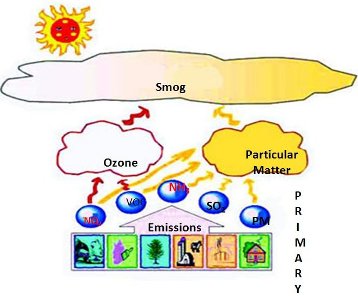
- Fewer emissions of smog-forming chemicals
- Better indoor and outdoor air quality
- Allergies or sensitivities to these paints is uncommon
- Ideal for commercial applications, and offer excellent scrub ability
- Quick Drying
- Low Odour
- Non-yellowing
- Increased UV resistance, flexibility