Precast, a promising sphere for future construction
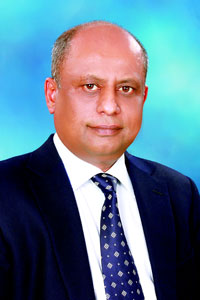
Interview: Ravishankar J B, President, GRIPSINDIA
|
Construction industry is waking up to the advantages of precast technology. If this technology planned and applied well, India can have more reliable and quality structures in the years to come. In a freewheeling interview with Built Expressions, Mr. Ravishankar J B, president, GRIPSINDIA outlines how precast manufacturing can be made more successful.
Being one of the pioneers in bringing precast technology to India, can you take us through the journey so far?
I have always been involved in bringing in new technologies to the country that are relevant to the construction arena. Precast is one of the several construction skills we researched, fetched to offer it to the industry. Around ten years back, we identified precast to be the market requirement, I think we did much ahead |
 |
of others. Under factory-controlled environment precast products are designed, produced well and installed to perfection at the site. This paves the way for an in-built quality and uniformity. We tested this technology in a small way by applying in several projects and showcased it to the construction fraternity.In addition to making people acquaint with the precast technology we also started assisting them in setting up business in this domain. On the similar grounds, Chennai-based, VME Precast Pvt. Ltd. was my brainchild, which is now successfully built several precast structures. They are building India’s first multi-story precast building—Accor Hotel in its hometown. Since precast was at a conceptual stage, our forethought made the market to come to them. But many players entering the market will keep the industry on tenterhook over the period of time in the future.
Precast is at a nascent stage. In view of this, how do you think India is accepting precast as a technology?
Even though precast is gaining momentum at this point of time, the technology was existing from 1950’s. Pandit Jawhar Lal Nehru was the forerunner in introducing precast to India; he set up precast plant in 1952 in Delhi to construct housing for migrants after the partition, which now called as Hindustan Prefab. His intent of building new houses in short period of time elicited to rope in precast to India. In fact, The Oberoi Hotel in Delhi was a precast frame building that by HPF. Hence, it is not a new technology but it was used in a primitive manner in many infrastructure projects and did not get the limelight it deserved. It was also shackled with a notion that it is an expensive construction solution over conventional building methods. The idea of mass production business inside the factory set up was just never motivated the industry giants.
Until 90’s construction was a low key affair with the usage of traditional materials. It’s only now with a thrust given to quality construction, precast has come as a rescue technology, wtih main intention to overcome labour shortage. However, at this point in time, it is considered as a better construction technology that can give a good product in half of the time.
What are the impending factors for the growth of precast industry?
In India, construction industry is an unorganized sector and the application of technology has got no time. At this stage, embracing precast may be a challenge as precast is a capital intensive industry and it needs time & money to plan everything. The investors and industry are not ready to fund it as sufficient market research & potential is not readily available. The majority of the stakeholders in construction industry want everything to be low cost and they are not ready to pay nothing for the technology. This is posing as a biggest drawback for precast to get a right investments from right investors.
Currently, precast is largely used only in infrastructure projects including many metros and bridges. The elements used cannot get total precast benefit because these precast elements are neither produced in factory controlled environment nor mass produced due to the lack of standardisation of designs. With the availability of barely few precast players, you need to produce & assemble components all by yourself. On the other hand, a complete precast company having a factory can offer entire expertise of designing to erection of structures. By realising the possibilities at the early stage of project, it is possible to plan a business and then run to cater the market over the period of time.
Training in precast can make a big difference, which is lacking at this juncture. In the next few months, we are planning to hold a full-fledged training programme in precast domain encompassing design, material, understanding the market needs and supply chain management aspects. It is a promising domain within the construction industry. Since it is associated with working against time and target, it calls for attractive remuneration. People with good expertise in precast can make a successful career and create business opportunities.
To accept precast as a successful technology in the construction industry, what kind of approach we should we adapt?
Instead of using precast to tide over labour shortage, view it with a focused marketing approach. To give you an analogy, the automobile industry has matured investors and they have to plan assembling by having various vendors from the stage of designing, production and selling of the product. Therefore, we witness lot of innovations happening in automobile. The construction arena.has got many stakeholders thus limiting the scope for innovation and advancements. Instead, we got to have supply chain management approach where all activities can be shared. We are proposing such initiatives to potential entrepreneurs. We know the market and based on the capability we try to fit the individual in a respective area of the supply chain.
Big players who can infuse huge investments should take the lead to start a precast industry. One needs to market specific and clear whether you cater to residential or commercial projects because setting up a general plant supplying to a mix of projects may not be a viable option. You need to make sure all investments and manpower are going in a single direction and this way if you are specific market oriented, you can succeed even with a least investment
The only way to sustain in the precast industry is to have a technology that aids mass production. When produced in mass, it can be price-sensitive and eventually, buyers can opt for this solution easily. On the contrary, when produced in less, price will be higher making products costlier. However, the market research plays a big part in this business over the period of time.
Why application of technology is so important in precast?
Like any other growing businesses, we need to understand the market status of precast—whether it is at conceptual stage, ahead of time, volume game or a commodity.. Most of the technological advancements in precast have happened in Europe. But in India, technological advancements have not yet happened due to the nacent stage of precast industry itself. But the mass production technologies from Europe or other place can be used in India with proper application of the technologies in appropriate markets.
However, application of the technology is very important and without any proper thinking on application, even precast technology can be considered useless by the industry peers. For instance, Spain has ‘ghost towns’ which has most of the buildings in precast and they are unoccupied. They were constructed when the economy was in boom thus overestimating market requirement, which in turn was a failure. Hence, identifying the application of technology in precast is equally significant.
Going forward, do you think precast can be a feasible solution for the future buildings in India?
Demand for precast is already existing but the supply is the challenge. If more research on the materials, equipments and processes are offered, people may be pulled towards in starting up the precast plants. Yet, people still fear precast to adopt, if it’s well planned and implemented the journey can be smoother. I encourage people to understand their capability, link it to the market’s requirement and eventually, associate them to plan and run the business. We can do the handholding till the initiative becomes a successful venture.