Smart Cities Council-India (SCC-I)
|
|
Mr. Dravida Seetharam, Executive Director, Smart Cities Council-India speaks exclusively with Built Expressions how SCC-I gives a 360 degree approach to improve urbanization. Smart Cities Council India (SCC-I) is the first regional chapter of the Global Smart Cities Council and a collaborative endeavor between Global Smart Cities Council and Centre for Sustainable Development (CSD). A workshop forum in Bangalore on 12 December 2013 Cities of the Future: Smart and Sustainable marked its launch.
|
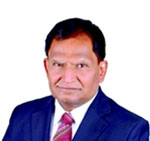
Dravida Seetharam (Excutive Director Smart Cities Council-India)
The mission of the Council is to accelerate growth in the smart cities sector by lowering barriers to adoption of digital technologies and intelligent design through thought leadership, outreach, tools and advocacy. The Council's partners include some of the world's leading technology companies with expertise in smart cities and infrastructure. The workshop forum coinciding with the launch of SCC-I and future SCC-I events will serve as vendor-neutral platforms promoting creative synergy between diverse stakeholders citizens, policy makers, financiers and technology experts among others. SCC-I promote cities that embody three core values:
- Livability: Cities that provide clean, healthy living conditions without pollution and congestion along with a digital infrastructure that makes city services instantly and conveniently available anytime, anywhere.
- Workability: Cities that provide the enabling infrastructure energy, connectivity, computing, essential services to compete globally for high quality jobs.
- Sustainability: Cities that provide services without stealing from future generations.
A 'Smart City' is defined as 'a developed urban area that creates sustainable economic development and high quality of life by excelling in multiple key areas; economy, mobility, environment, people, living, and government through strong human capital, social capital, and/or ICT infrastructure'.
Smart Cities Council defines a smart city as one that uses information and communications technology (ICT) to enhance its livability, workability and sustainability. There are three functions associated with the city data: collecting, communicating and "crunching". First, a city collects information about itself through sensors, other devices and existing systems. Next, it communicates that data using wired or wireless networks. Finally, it ‘crunches’ (analyzes) that data to understand the current situation and future status of the place.
A smart city is a system of systems (water, transportation, built environment, etc.) each impacting the rest. Over, the last few years, we have refined our ability to merge multiple data streams and mine them for amazing insights. It is these insights that enhance the livability, workability and sustainability of a smart city.
In other words, a smart city gathers data from smart devices and sensors embedded in its roadways, power grids, buildings and other assets. It shares that data via a smart communications system that is typically a combination of wired and wireless. It then uses smart software to create valuable information and digitally enhanced services.
Some of those services are used by the city itself. Examples include emergency response centers and city-wide control centers. Likewise, enhancements such as smart power grids and smart water grids improve efficiency and reliability while also giving customers detailed information to help them reduce their bills. Smart transportation uses the power of computers to optimize travel throughout the city.
Some of those services are delivered digitally via computer or smart phone. Examples include online permitting, online lookup of information such as buried cables, water mains, bus arrival times, traffic maps, crime reports, emergency warnings, taxi locations and much more.
Estimates of the smart cities market vary widely. The one constant is a universal expectation of substantial growth. New cities will be built and existing ones will be retrofitted to create economic development and improve the lives of citizens
- According to ABI Research, smart cities technology is an $8.1 billion market today and in five years, the market will grow to almost five times that size, reaching $39.5 billion.
- Pike Research forecasts that investment in smart city technology infrastructure will total $108 billion during the decade from 2010 to 2020.
- The Smart 2020 report is even more bullish, claiming the related technologies and industries will grow four-fold to become a $2.1 trillion market by 2020.
"I would like to quote Jim Whittaker, Executive Director, Smart Cities Council, USA, who said, 'Like the pioneering Smart Cities Council today, the Centre for Sustainable Development has been a pioneer in India for a decade in pushing hard to persuade Indian businesses, organizations and government to incorporate "sustainability" in most, if not in all their activities. It has focused on energy efficiency, water, wastewater and waste management, truly key aspects for any community, town or city. It has developed a strong reputation for effectiveness and advocacy. We could not have picked a better organization with which to collaborate in this common space. "Sustainability" in reality permeates throughout our mission and strategies, for it underlies all aspects of a city's livability, workability and long- term health," says Mr. Dravida Sethuram, Executive Director, Smart Cities Council-India.
As Dr A Ravindra, Chairman, Centre for Sustainable Development (CSD) outlines: "As the world rapidly urbanizes, cities will be defined more by the ideas they generate than just by the grandeur of their physical infrastructure. It is, therefore, essential to create the right urban ecosystem which stimulates innovation on the one hand and facilitates provision of smart and sustainable civic services on the other. It is with this end in view that the Centre for Sustainable Development (CSD) has joined hands with the Global Smart Cities Council to set up the Smart Cities Council India (SSC-I).
Urbanization in India has significant implications for the future development of the country. India’s future lies in its cities. By 2030, India’s urban population will touch 590 million or nearly twice that of the United States, while Indian cities will generate close to 70% of the GDP. This will exert tremendous pressure on urban infrastructure and services.
This dramatic growth also provides impetus for the creation of smart cities which leverage information and communications technology (ICT) to greatly improve the productivity, lifestyle and the prosperity of our people. Additionally, green growth strategies can build environmentally sustainable cities.
Readiness Guide
The Global Smart Cities Council has brought out a Smart Cities Readiness Guide, a first-of-its-kind collaborative, comprehensive and vendor neutral framework for a smart city against which cities can assess their readiness to innovate identifying a path, taking next steps and measuring progress. The Guide is also a conceptual roadmap to address growth strategies by focusing on universal principles that unite key areas such as energy, transportation, water and public safety. Prepared with inputs from best-in-class companies cutting across industries with reviews and contributions from more than 50 of the world’s foremost independent experts on smart city, the Readiness Guide was released on 18 November 2013 at the Smart City Expo World Congress in Barcelona, Spain.
The Guide elaborates upon eight areas that that can yield quick payback and includes actionable recommendations. It also outlines simple achievable yet powerful technology targets for cities. Altogether, it is an authoritative resource for city leaders to make confident informed decisions as they seek to transform cities and communities with smarter planning, governance, policy and technology. The Guide is available at no cost to members of the Smart Cities Council and finds relevance in the Indian context too.
Smart Cities Club
SCC-I leveraging the partnership of CSD aims to identify college students in various disciplines from engineering colleges in and around Bangalore to work with SCC I on small scale identified urban projects focused on technology and sustainability in the areas of energy, water, transportation and waste management among others. SCC-I will launch an awareness and invitation campaign complemented by interactive presentations in colleges to solicit volunteers and faculty nominations. It will then render selection criteria to ultimately zero in on the best suited candidates from various disciplines to form a Smart City Club in each college.
SCC will mark out a calendar plan for each club which will have a student lead, a faculty member as a resource person and a coordinator from CSD to monitor and report activities to ensure each club is progressing in the right direction.
As a first step, SCC I under the initiative of CSD convened an interactive meeting with a few of Bangalore’s leading engineering colleges and the idea was more than welcome. Plans are afoot to conduct orientation programs in February 2013. The initial focus of the resultant Smart City Clubs would be to influence citizen behavior in the neighborhood safety, traffic discipline and safety and waste reduction.
The debutante smart city project of SCC-I at Devanahalli has already been initiated with the master city plan being drawn up for implementation. We are in the process of engaging key stakeholders in the planning process technology, infrastructure, banking, government and citizens.
Step Forward
In January 2014, the Smart Cities Council-India will formalize and launch its Council of Members to deliberate upon and further concretize the 2014 and five-year roadmap towards building smart and sustainable cities.
Outcomes of this meeting should provide fillip for various solutions to be integrated to address key areas of opportunity en route to creating new smart cities as such as the pioneer smart city in Devanahalli. Talks are also on to create similar cities elsewhere in Karnataka and other States of India.
QUOTES
The debutante smart city project of SCC-I at Devanahalli has already been initiated with the master city plan being drawn up for implementation. We are in the process of engaging key stakeholders in the planning process technology, infrastructure, banking, government and citizens.
SCC-I will launch an awareness and invitation campaign complemented by interactive presentations in colleges to solicit volunteers and faculty nominations. It will then render selection criteria to ultimately zero in on the best suited candidates from various disciplines to form a Smart City Club in each college.
"Sustainability" in reality permeates throughout our mission and strategies, for it underlies all aspects of a city’s livability, workability and long- term health, Mr. Dravida Sethuram, Executive Director, SCC-I
The mission of the Council is to accelerate growth in the smart cities sector by lowering barriers to adoption of digital technologies and intelligent design through thought leadership, outreach, tools and advocacy.